Foundations of Quantum Hardware- A Multi-Architecture Simulation Portfolio
A comprehensive suite of simulations exploring the physical dynamics, noise constraints, and logic gate synthesis across diverse quantum architectures, including superconducting circuits, trapped ions, neutral atoms, and linear optics.
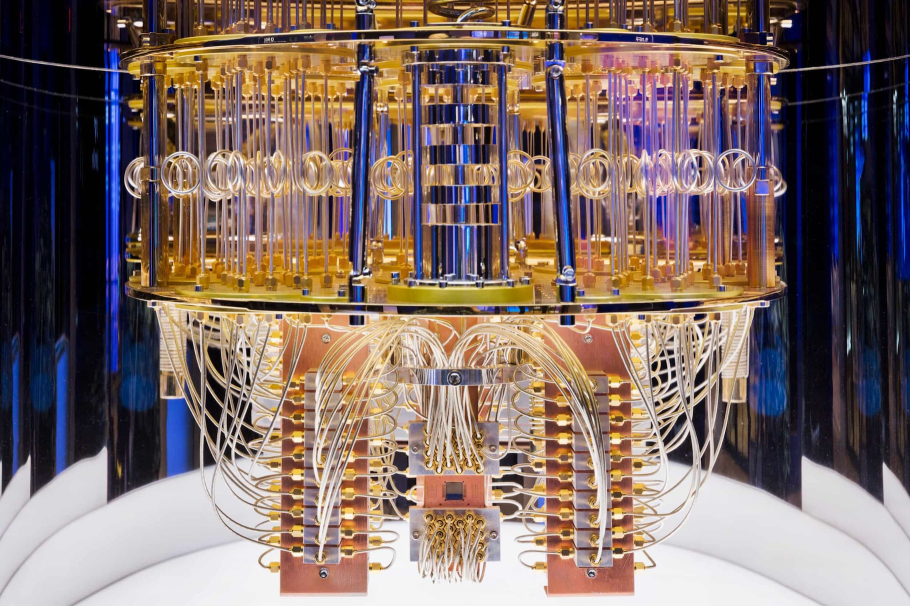
This comprehensive project explores the physical and algorithmic foundations of diverse quantum computing architectures. By simulating various hardware modalities—including superconducting circuits, ion traps, neutral atoms, and linear optics—the project demonstrates a deep understanding of the physics driving quantum gates and the impact of noise on quantum algorithms.
Core Sub-Projects & Key Achievements
1. Quantum Fundamentals: Bell Inequalities and Hidden Variables
- Evaluated fundamental quantum mechanics principles by simulating a hypothetical hidden variables theory.
- Generated random hidden variables corresponding to quantum measurements across three different axes.
- Computed correlation probabilities to verify Bell inequality measurements, successfully manipulating parameters to make the inequality saturated.
2. Superconducting Qubits: Josephson Junction Dynamics
- Developed a rigorous time-step simulator to track the phase, charge, and voltage dynamics of superconducting Josephson junctions.
- Modeled and analyzed the junction behavior across four configurations: underdamped and overdamped junctions in both stable and unstable regimes.
- Successfully calculated the critical starting voltage for runaway oscillation and determined the fundamental voltage spike frequency corresponding to modern definitions of the Volt.
3. Error Analysis: Quantum Noise and Resilience
- Leveraged Qiskit’s noise modeling features to analyze the degradation of a four-qubit cat state circuit.
- Implemented advanced fidelity metrics by evaluating worst-case error rates via circuit reversal.
- Synthesized an optimized controlled-X (CX) operation from fundamentally noisy and imperfect CRX and CRY gates, identifying the precise single-qubit error threshold where the custom decomposition outperforms a naive approach.
4. Trapped Ions: Cirac-Zoller and Mølmer-Sørensen Gates
- Simulated laser-induced spin-dependent forces on trapped ions to model the Hamiltonian of phonon and electronic state interactions.
- Developed matrix representations for fundamental ion-trap specific entangling operations: the Cirac-Zoller (CZ) gate and the Mølmer-Sørensen (MS) gate.
- Successfully constructed and verified a highly accurate CNOT gate by applying localized single-qubit rotations combined with these underlying physical ion-trap interactions.
5. Neutral Atoms: Rydberg Blockade Optimization
- Constructed a comprehensive Rydberg blockade Hamiltonian modeling the atomic excitation and interaction blockades between neutral atoms.
- Engineered theoretical CPHASE and CZ gates by simulating precise resonant driving pulses on target qubits under a blockade regime.
- Optimized interaction strengths and cycling pulse durations across both single and double blockade sequences, successfully achieving highly optimized >99% gate fidelity.
6. Linear Optics: Photonic Quantum Computing
- Engineered a custom photonic simulator implementing fundamental linear optical components: Polarizing Beam Splitters (PBS), Beam Splitters (BS), Polarization Rotators (PR), and Quarter-Wave Plates (QWP).
- Devised circuits leveraging these optical components and conditional detectors to successfully generate reliable two-photon and four-photon entanglement.
- Executed simulated photonic Bell tests and applied non-deterministic photon fusion operations to synthesize a three-photon cluster state with the correct probabilistic amplitudes.